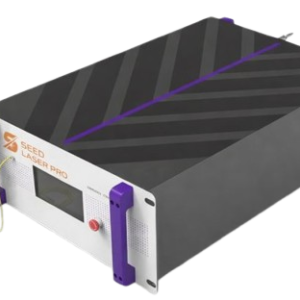
Scaling power without sacrificing spectral purity is the core challenge in high power single frequency laser design.
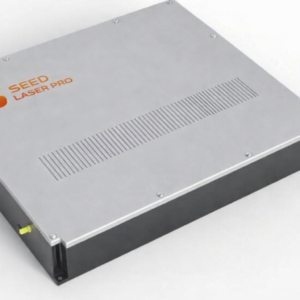
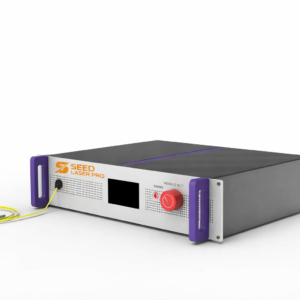
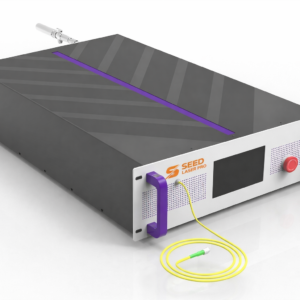
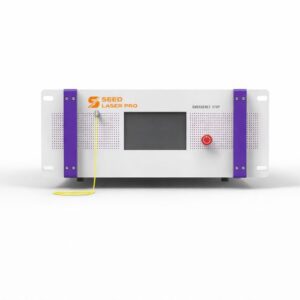
Techwin’s high power single frequency fiber lasers cover three wavelength bands: 1064 nm (Ytterbium), 1550 nm (Erbium), and 2.0 µm (Thulium-doped fiber). Output power runs from 0.05 W up to 500 W. Narrow linewidth and low phase noise are maintained across the full power range. All configurations ship with PM fiber output and are ready for integration into coherent LiDAR systems, Rubidium laser cooling platforms, long-range sensing deployments, and high-power MOPA architectures. Techwin has worked as a single frequency laser specialist for over 20 years.
QUICK SPECIFICATION SUMMARY
| Parameter | Range / Options |
| Wavelength | 1.0 µm (Yb) · 1.5 µm (Er) · 2.0 µm (Tm) |
| Output Power | 0.05 W to 500 W depending on wavelength and configuration |
| Output Type | PM (polarization-maintaining) and non-PM |
| Operation Mode | CW single frequency, single longitudinal mode |
| Phase Noise | Low phase noise across full power range |
| Applications | Coherent LiDAR · Rubidium cooling · Spectroscopy · Sensing · MOPA seeding |
Wavelength Bands and Power Ranges
Techwin’s high power single frequency fiber laser range is organized by wavelength band. Each band covers three power tiers matched to the output requirements of real applications.
1064 nm Single Frequency Seed Laser (Ytterbium Band)
The 1.0 µm band is the most widely used wavelength in high power fiber laser systems. Ytterbium-doped fiber delivers high gain efficiency and broad amplification bandwidth. It is the standard choice for high power MOPA architectures and for frequency conversion to 532 nm.
Techwin’s 1064 nm range covers 0.2 W to 500 W, with narrow linewidth and PM output across all power tiers. Core applications include coherent LiDAR, industrial interferometry, high-resolution remote sensing, and 532 nm low noise laser generation via second harmonic generation.
1550 nm Single Frequency Laser (Erbium Band)
The 1.5 µm Erbium band is the standard wavelength for coherent sensing, fiber optic gyroscopes, long-range LiDAR seed sources, and eye-safe outdoor laser systems. Techwin’s 1550 nm range covers 0.2 W to 120 W, with low phase noise and PM fiber output throughout.
The 1550 nm band is also the pump wavelength for frequency-converted sources targeting the 780 nm Rubidium transition. A 1560 nm seed laser, frequency-doubled via second harmonic generation, produces the 780 nm Rubidium cooling laser output required for cold atom experiments and quantum sensing platforms.
2.0 µm Thulium-doped Fiber Laser
The 2.0 µm Thulium-doped fiber laser covers molecular absorption features for water vapor, CO2, and other gases that are outside the reach of shorter-wavelength systems. Techwin’s 2.0 µm range covers 0.05 W to 500 W.
Key applications include environmental gas monitoring, medical sensing, coherent Doppler wind LiDAR, and mid-infrared seed generation through nonlinear frequency conversion.
Power Series by Wavelength
| Wavelength | Power Tiers Available | Primary Use Cases |
| 1.0 µm | 0.2 to 2 W · 2 to 20 W · 20 to 500 W | LiDAR · interferometry · frequency conversion |
| 1.5 µm | 0.2 to 2 W · 2 to 20 W · 20 to 120 W | Coherent sensing · gyroscopes · LiDAR seeding |
| 2.0 µm | 0.05 to 2 W · 2 to 20 W · 20 to 500 W | Spectroscopy · wind LiDAR · medical · CO2 sensing |
Applications
Coherent LiDAR and Long-range LiDAR Seed Source
Coherent LiDAR systems detect distance, velocity, and vibration by analyzing the interference between a transmitted beam and its returning echo. The laser must deliver low phase noise, narrow linewidth, and enough output power to reach the target detection range.
For long-range LiDAR seed source applications, Techwin’s 1550 nm and 1064 nm high power single frequency lasers provide the coherence length and power levels the system requires. PM fiber output allows direct integration into fiber-coupled transceiver architectures without additional polarization management hardware.
Rubidium Laser Cooling and Atomic Physics
Rubidium cooling experiments require precise optical excitation at the 780 nm D2 absorption line. The established approach is to take a 1560 nm narrow linewidth single frequency seed laser and frequency-double it to 780 nm using a nonlinear crystal.
The 780 nm Rubidium cooling laser output inherits its linewidth and phase noise directly from the 1560 nm seed. Techwin’s 1550 nm high power single frequency lasers are built to meet the spectral purity and output power requirements of these frequency conversion chains.
532 nm Low Noise Laser Generation
A 1064 nm single frequency fiber laser, doubled via second harmonic generation, produces 532 nm green output. The linewidth and phase noise of the 532 nm low noise laser are set entirely by the 1064 nm source.
Techwin’s 1064 nm high power range provides the low phase noise foundation required for spectrally clean 532 nm generation. This output is used in quantum optics experiments, precision holography, and high-resolution interferometry.
PM Fiber Amplifier Seeding
A PM fiber amplifier requires a seed laser with stable PM output, controlled polarization extinction ratio, and spectral characteristics compatible with the amplifier gain bandwidth. Techwin’s high power single frequency seed lasers are specified and characterized for PM fiber amplifier seeding applications.
Both seed-only and integrated seed-plus-amplifier configurations are available. Output power, linewidth, and connector type can be matched to the amplifier chain requirements.
How to Select the Right Configuration
Three questions narrow the selection quickly.
What wavelength does your application require?
- Coherent LiDAR, interferometry, or 532 nm generation: 1064 nm
- Fiber sensing, gyroscopes, long-range ranging, or 780 nm Rubidium cooling: 1550 nm
- Molecular spectroscopy, wind sensing, or mid-IR generation: 2.0 µm
What output power do you need?
Each wavelength band offers three power tiers. Select based on the full system power budget, not just the peak requirement. Account for coupling losses, modulator insertion loss, and any power splitting in the optical path before specifying output power.
Do you need PM output?
PM output is required when downstream components such as modulators, interferometers, or amplifiers are polarization-sensitive. Non-PM configurations are available when polarization is managed elsewhere in the system.
If your application requires a configuration outside the standard range, contact Techwin to discuss custom options.
Why Techwin
Techwin is a single frequency laser specialist with over 20 years of experience in fiber laser design and manufacturing. The high power range is built on the same DFB fiber laser architecture used across the seed laser line, extended with PM fiber amplifier stages optimized for low phase noise at every power level.
Every unit is tested before shipment. Linewidth, output power, phase noise, and polarization extinction ratio are all verified against specification. No sampling. Every unit.
The product range serves research institutions, defense and aerospace contractors, photonics instrument manufacturers, and industrial sensing companies in markets worldwide.