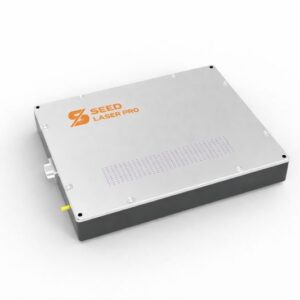
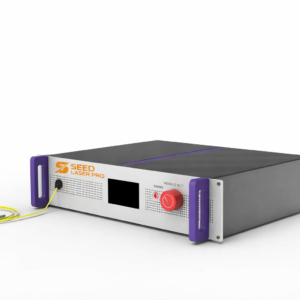
An ASE light source does what a laser cannot.
It delivers high-power, broadband light with low coherence through a single-mode fiber. That sounds simple. But for FBG sensor arrays, fiber optic gyroscopes, and OCT systems, it is exactly the right tool. Narrowband lasers create coherence noise in these systems. ASE sources suppress it. Techwin’s broadband ASE light sources cover the 1.0 µm, 1.5 µm, and 2.0 µm bands, in compact module and benchtop formats, with SM and PM output options. If you are not sure which configuration fits your system, our engineering team can help you spec it.
QUICK SPECIFICATION SUMMARY
| Parameter | Range / Options |
| Wavelength Bands | 1.0 µm (Yb) · 1.5 µm (Er) · 2.0 µm (Tm) |
| Output Type | Single-mode fiber coupled |
| Coherence | Low coherence broadband output |
| Polarization | SM and PM options available |
| Form Factor | Compact module · OEM compatible · Benchtop |
| Applications | FBG sensing · Fiber gyroscopes · OCT · Component testing · Gas sensing |
What Is an ASE Light Source?
An ASE light source generates light through amplified spontaneous emission in a rare-earth-doped fiber. There is no resonant cavity. No lasing threshold. The doped fiber is pumped by a semiconductor diode. Rare-earth ions absorb that pump energy and emit light spontaneously. That spontaneous emission is then amplified as it travels along the fiber.
The output is spectrally broad, spatially coherent, and low in temporal coherence. That specific combination is what makes ASE sources so useful. You get the single-mode fiber coupling of a laser, the broadband spectrum of an LED, and the low coherence that sensing and interferometry systems depend on.
Techwin’s ASE sources use ytterbium-doped fiber at 1.0 µm, erbium-doped fiber at 1.5 µm, and thulium-doped fiber at 2.0 µm. Each band is optimized for the applications where it is used.
Need help choosing a wavelength band? Talk to an engineer.
Why Low Coherence Matters
Here is the key distinction most spec sheets skip over.
A single frequency laser, like the ones in our single frequency fiber seed laser range, has a coherence length measured in hundreds of kilometers. That is ideal for interferometry at long path differences. But in FBG sensor arrays, fiber gyroscopes, and OCT systems, that same long coherence becomes a problem. Multiple reflections and scattering events in the fiber start interfering with each other. The result is coherence noise that corrupts the measurement.
An ASE light source has a coherence length measured in micrometers to millimeters, depending on its spectral bandwidth. That short coherence length eliminates the noise. It allows depth-resolved imaging in OCT. It prevents cross-coupling interference in fiber gyroscopes. It lets FBG arrays reflect their individual wavelengths cleanly.
When a narrowband laser is the wrong tool, a broadband ASE source is usually the right one.
ASE vs SLED vs Single Frequency Laser
Buyers often compare these three source types. Here is how they differ in practice.
| Feature | ASE Fiber Source | SLED (Superluminescent Diode) | Single Frequency Laser |
| Spectral bandwidth | Broad (30 to 80+ nm) | Broad (20 to 100+ nm) | Extremely narrow (Hz to kHz) |
| Coherence length | Short (mm range) | Short (µm to mm) | Very long (km range) |
| Output power | Medium to high | Low to medium | Low to high (MOPA) |
| Fiber coupling | Single-mode fiber | Typically free space or fiber | Single-mode PM fiber |
| Noise | Low coherence noise | Low coherence noise | Low phase noise |
| Best for | FBG, FOG, OCT, testing | OCT, interferometry | Spectroscopy, LiDAR, quantum |
| Form factor | Compact module | Compact, often chip-based | Module or benchtop |
The short version: Use an ASE source when you need broadband, low-coherence, high-power output through single-mode fiber. Use a SLED when size and bandwidth are the priority over power. Use a single frequency laser when spectral purity and long coherence length are what the application demands.
Not sure which fits your system? Request a recommendation.
Available Wavelength Bands
1.0 µm ASE Light Source (Ytterbium Band)
Centered around 1060 to 1080 nm. Used in ophthalmic OCT, where the shorter wavelength gives better depth resolution in retinal imaging. Also used for Ytterbium fiber amplifier characterization and 1.0 µm sensing systems.
1.5 µm ASE Light Source (Erbium Band)
The most widely used configuration. Erbium-doped fiber produces broadband output across the C-band or C+L band. This wavelength range sits in the lowest-loss transmission window of standard single-mode fiber. It is the default choice for FBG sensing networks, telecom component testing, and fiber optic gyroscopes. If you are not sure which band you need, 1.5 µm is the right starting point for most sensing and testing applications.
2.0 µm ASE Light Source (Thulium Band)
Covers molecular absorption features of water vapor, CO2, and other gases. Used in environmental gas monitoring, industrial process sensing, and broadband characterization of components designed for the 2.0 µm fiber band. If your application involves gas detection or 2.0 µm photonic component testing, this is the band to specify.
Wavelength Band Reference
| Band | Center Wavelength | Typical Bandwidth | Best For |
| 1.0 µm (Yb) | ~1060 to 1080 nm | 20 to 40 nm | Ophthalmic OCT · Yb component testing |
| 1.5 µm (Er) | ~1550 nm | 40 to 80 nm | FBG sensing · telecom testing · fiber gyroscopes |
| 2.0 µm (Tm) | ~2000 nm | 30 to 60 nm | Gas sensing · CO2 detection · 2 µm component testing |
Applications
FBG Sensor Interrogation
Fiber Bragg grating sensor arrays work by embedding wavelength-selective reflectors into fiber. Each grating reflects a narrow band of light. That reflected wavelength shifts when the grating is strained, heated, or pressurized. A broadband ASE source illuminates the entire array at once. Every grating reflects its signal simultaneously. A narrowband laser cannot do this without scanning.
Output power stability and spectral flatness of the ASE source directly determine sensor measurement consistency. Techwin’s ASE light sources are specified and tested for both.
Unsure which power level your FBG interrogator requires? Talk to an engineer.
Fiber Optic Gyroscope
FOG systems detect rotation by comparing the travel time of light propagating in opposite directions around a wound fiber coil. They need a broadband, low-coherence source to suppress coherence noise from fiber backscattering and polarization cross-coupling. A narrowband source produces intensity noise from these effects that limits rotation sensitivity.
The 1.5 µm band is standard for FOG applications. Its low fiber loss and mature erbium fiber technology make it the reliable choice for navigation-grade inertial sensing.
Optical Coherence Tomography
OCT creates depth-resolved cross-sectional images by low-coherence interferometry. The depth resolution is set by the spectral bandwidth of the light source. Wider bandwidth means finer depth resolution.
The 1.0 µm ASE source is the right choice for ophthalmic OCT and retinal imaging. The 1.5 µm source is used in cardiovascular and industrial OCT. For OEM OCT integration support, contact Techwin directly.
Optical Component Testing
A broadband ASE source is standard bench equipment in photonic production and R&D environments. It provides a known broadband input for measuring insertion loss, return loss, polarization-dependent loss, and wavelength-dependent transmission of fiber couplers, circulators, WDMs, isolators, and gratings.
Using a broadband ASE source is faster than sweeping a tunable laser, and more than sufficient for production-line component characterization. Both module and benchtop configurations are available.
Gas Sensing
The 2.0 µm ASE source covers the absorption bands of water vapor, CO2, CO, and other molecules relevant to industrial and environmental sensing. Its broadband output enables simultaneous measurement across multiple absorption features from a single source. This simplifies system design compared to approaches using multiple discrete laser wavelengths.
How to Choose the Right Configuration
Wavelength band is set by your application. FBG and FOG: 1.5 µm. Ophthalmic OCT: 1.0 µm. Gas sensing or 2.0 µm component testing: 2.0 µm.
SM or PM output: Standard single-mode is sufficient for most sensing and testing setups. PM output is needed for FOG systems and any application where polarization control at the output connector matters.
Module or benchtop: OEM module configurations integrate directly into instruments. Benchtop units with power interfaces suit laboratory and production test environments.
Custom bandwidth configurations are available for applications requiring specific spectral profiles, flatness filters, or non-standard center wavelengths. Request OEM integration support to discuss your requirements.
Why Techwin
Techwin’s ASE light sources are built on the same rare-earth-doped fiber manufacturing platform used across the single frequency laser and amplifier product lines. All three wavelength bands are produced in-house. Output power, spectral bandwidth, spectral flatness, and stability are verified on every unit before shipment.
OEM module and custom configurations are available. If your application has requirements outside the standard product range, our engineering team works with you at the design stage, not after.