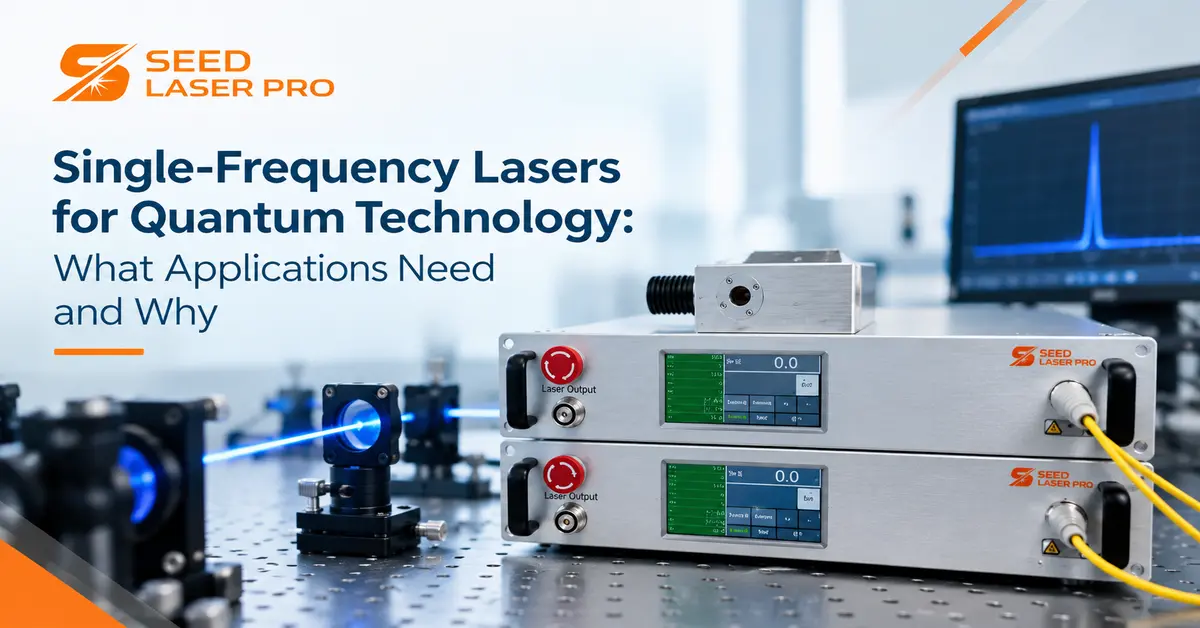
Single-Frequency Lasers for Quantum Technology: What Applications Need and Why
Lasers for quantum technology need Hz-to-kHz linewidth and low RIN. See requirements for clocks, cooling, sensing and QKD, and why fiber wins.
Relative Intensity Noise (RIN) in a seed laser refers to rapid fluctuations in optical power that can affect laser stability and overall system performance. This article explains what causes RIN, why low noise matters, and how to determine the right RIN level for demanding fiber laser and photonics applications.
Compare 1.0 µm, 1.5 µm, and 2.0 µm single-frequency fiber lasers by dopant, eye safety, atmospheric transmission, and application. This guide helps you choose the right wavelength for sensing, spectroscopy, LiDAR, and scientific applications.
Frank Chow is a fiber laser and photonics technology specialist focused on single-frequency, narrow-linewidth, and frequency-stabilized laser systems.
His expertise covers precision fiber lasers for coherent LiDAR, sensing, spectroscopy, interferometry, and high-power MOPA applications.
Learn how to choose the right seed laser by comparing wavelength, linewidth, power, coherence, PM fiber, and RIN for your application.
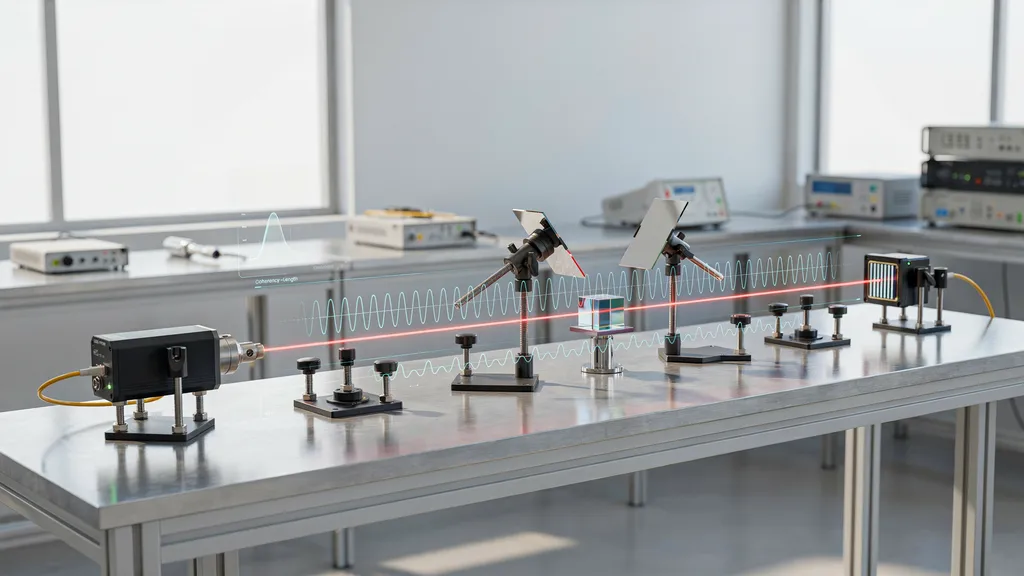
Learn what coherence length is, how laser linewidth affects it, and why choosing the right coherence is essential for LiDAR, interferometry, and fiber sensing.
See how LiDAR remote sensing works step by step, from laser pulses to 3D point clouds, plus real uses and key limits.
Discover how a MOPA fiber laser system works by combining a master oscillator with a power amplifier. This architecture delivers superior pulse control, enhanced marking quality, and greater flexibility across industrial, medical, and electronics applications.
This guide can help you understand the ways that master oscillators and the seed laser differ, and why this distinction is crucial in real-world lasers. We’ll go over the ways these components impact performance to ensure that you are able to pick the most appropriate configuration without hesitation.