
Objective
This guide can help you understand the ways that master oscillators and the seed laser differ, and why this distinction is crucial in real-world lasers.
We’ll go over the ways these components impact performance to ensure that you are able to pick the most appropriate configuration without hesitation.
Key Takeaways
- Seed lasers define the quality of your signal, including linewidth and stability
- Master oscillators define the system’s starting point in laser architecture
- In most systems, seed lasers act as master oscillators, but not always
- A proper MOPA configuration separates signal quality from power scaling
- Choosing the right setup improves accuracy, efficiency, and scalability
Introduction
If your laser system isn’t delivering the precision you expect, the real issue might not be power; it could be how your system is built.
Did you know? In high-precision applications like LiDAR and interferometry, laser systems often rely on extremely narrow linewidth signals, sometimes as low as a few kilohertz, to maintain accuracy and measurement stability.
Here’s the thing: when engineers talk about the seed laser vs master oscillator difference, they often mix the terms or treat them as the same. But they’re not exactly identical, and understanding that gap is key to building a high-performance system.
What this really means is simple: if your goal is low noise, high coherence, and stable output, then your system design matters just as much as your components. And that’s where seed lasers and master oscillators come into play.
| Table of Contents |
|---|
| What Is a Seed Laser? |
| What Is a Master Oscillator? |
| How They Work Together in MOPA Systems |
| Seed Laser vs Master Oscillator Difference |
| When to Use Each |
| Real-World Applications |
| Common Mistakes |
| FAQs |
Understanding the Seed Laser vs Master Oscillator Difference in Fiber Systems
Before getting into comparisons, let’s build a simple foundation.
In modern fiber lasers, components are rarely isolated. Instead, they work together. So rather than thinking of seed lasers and master oscillators as competitors, it’s more useful to think of them as roles within a system.
Let’s break it down.
Seed Laser Basics – Role in Fiber MOPA System Components
A seed laser is the starting signal generator in a laser system.
- It produces a low-power but highly stable beam
- It defines wavelength, phase noise, and linewidth
- It ensures consistency before amplification begins
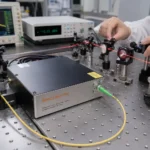
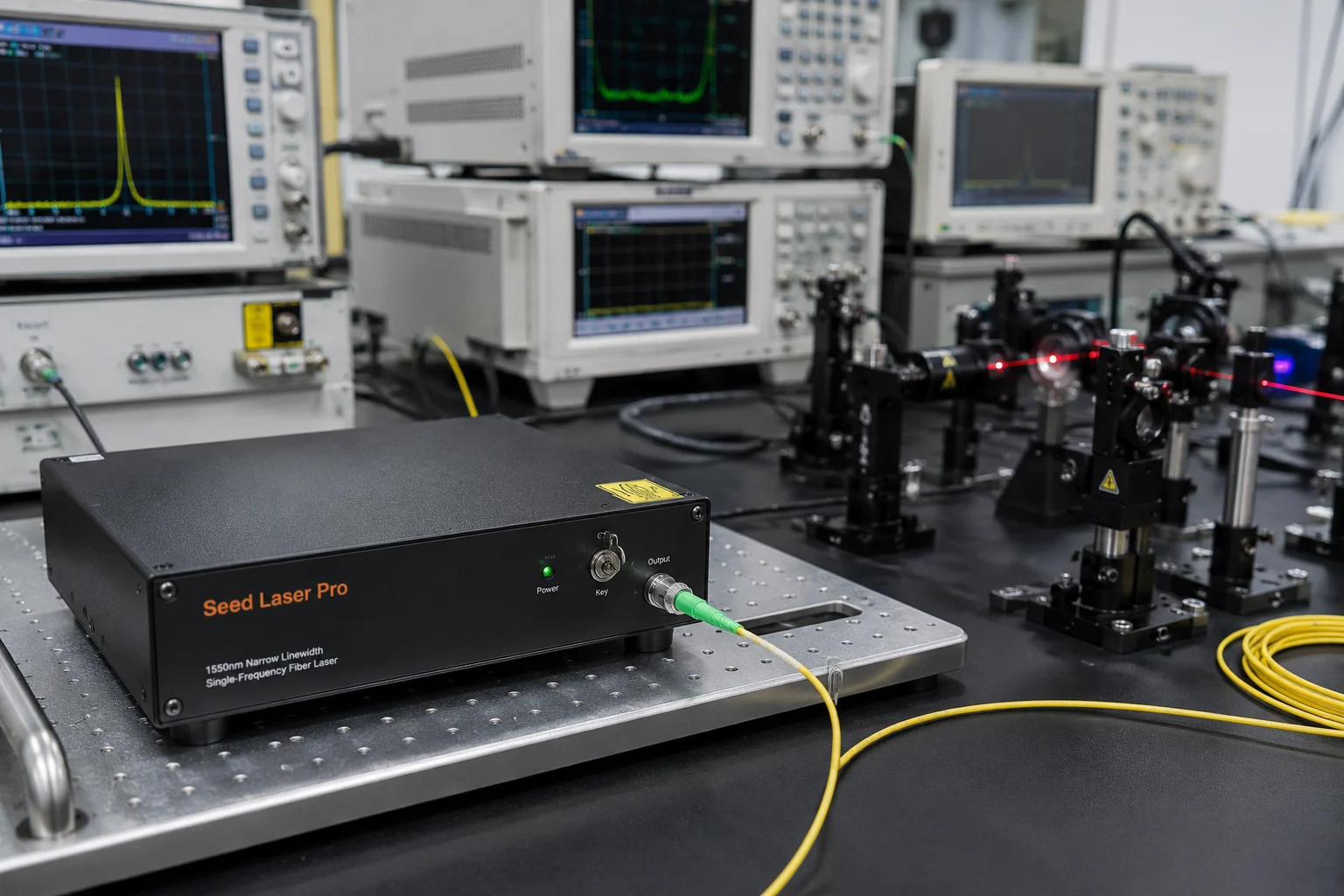
From the Seed Laser Pro product lineup, we see that these systems are engineered for ultra-low noise and single-frequency operation , making them ideal for applications like coherent LiDAR and quantum sensing.
Why this matters:
- The amplifier cannot fix a poor signal
- Whatever comes from the seed laser gets amplified, good or bad
Simple example:
Think of a seed laser like a microphone input. If the input is clean, amplification sounds perfect. If it’s noisy, amplification only makes it worse.
Master Oscillator in Master Oscillator Power Amplifier Laser Systems
A master oscillator refers to the initial laser source stage in a system, not necessarily a specific product.
- It creates the original beam
- It defines core optical properties
- It operates at low power but high control
In MOPA architectures, the master oscillator works with an amplifier stage that increases output power without changing the beam characteristics.
Here’s the key point:
👉 In many cases, the seed laser itself functions as the master oscillator
But the terms differ in scope:
- Seed laser → physical device
- Master oscillator → system role
Seed Laser vs Master Oscillator: Difference in MOPA Seed Laser Explained
Now let’s get into the core comparison.
MOPA Seed Laser Explained – Where the Confusion Starts
MOPA stands for Master Oscillator Power Amplifier.
This setup includes:
- A master oscillator (often the seed laser)
- One or more amplifier stages
The benefit is simple but powerful:
You separate signal generation from power scaling
Instead of trying to generate high power and high precision in one device, you divide the work.
According to photonics principles:
- The oscillator produces a clean, stable signal
- The amplifier increases power without changing signal properties
Fiber MOPA System Components and Signal Flow Explained
Let’s walk through how a MOPA system works step by step.
Typical flow:
- Seed Laser / Master Oscillator → generates signal
- Pre-Amplifier → boosts signal slightly
- Power Amplifier → increases output to required levels
Supporting components:
- Optical isolators
- Active fiber gain media
- Couplers
These ensure stability and protect the system from feedback.
It has been shown that MOPA systems maintain wavelength and coherence while increasing power, which is crucial for precision applications.
Key Differences Between Seed Lasers and Master Oscillators
Now let’s make it crystal clear.
Side-by-Side Comparison Table
| Feature | Seed Laser | Master Oscillator |
| Definition | Physical laser source device | Role within the laser system |
| Function | Generates an initial beam signal | Specifies the system’s input stage |
| Power level | Low power | Low power |
| Focus | Precision, stability, linewidth | System architecture |
| Usage | Can be standalone or in MOPA | Mostly used in MOPA systems |
| Relationship | Can act as a master oscillator | Often fulfilled by a seed laser |
Functional Comparison Based on Use
- Seed lasers are about signal quality
- Master oscillators are about the system design context
That’s the real seed laser vs master oscillator difference.
Hz-Level Linewidth Laser Performance and Stability Factors
Let’s talk performance.
An Hz-Level Linewidth Laser means a laser with extremely narrow frequency variation.
Why it matters:
- Lower linewidth = higher coherence
- Higher coherence = better measurement precision
Applications that depend on this include:
- Interferometry
- Quantum research
- Frequency stabilization
Seed Laser Pro provides single-frequency fiber lasers designed for ultra-narrow linewidth and low noise, supporting high-end applications like sensing and LiDAR.
When to Use Each – Practical Decision Framework
Let’s simplify your decision.
Use a Seed Laser When You Need:
- Ultra-low noise
- Stable wavelength
- Precise beam control
Use a Master Oscillator Concept When:
- Designing a complete MOPA system
- Planning multi-stage amplification
- Working on large-scale fiber systems
Industry-Based Use Cases
1. LiDAR Systems
- Require ultra-stable seed source
- MOPA enables long-range precision
2. Scientific Research
- Seed laser ensures coherence
- Amplification supports experimentation
3. Industrial Applications
- MOPA systems provide flexibility
- Adjust power without sacrificing quality
Real-World Example
A sensing system using a narrow linewidth seed laser achieved:
- Reduced noise
- Improved signal detection
- Better long-range measurement
This is because amplifiers preserved the original signal quality, proving the value of separating oscillator and amplification stages.
Common Mistakes to Avoid
Even experienced users get this wrong.
1. Assuming the Seed Laser and Master Oscillator Are Always the Same
Yes, they can overlap, but they don’t always.
2. Ignoring System Design
Focusing solely on power can result in unsatisfactory performance.
3. Overlooking Amplification Effects
Amplifiers could cause noise if they are not designed correctly.
Expert Insight
The experts in the field of photonics are unanimous on a single point:
Separating signal generation from amplifying improves the performance and control.
This is why MOPA has become the standard in advanced fiber laser systems.
Why Seed Laser Pro Matters
When choosing components, quality matters.
Seed Laser Pro offers:
- Single-frequency fiber lasers
- Ultra-narrow linewidth performance
- Stable output for demanding applications
Their portfolio includes solutions for:
- LiDAR
- Precision sensing
- Scientific research
Used correctly, these tools help you build a reliable laser system with consistent performance.
The Real Difference Isn’t Just Technical- It’s Performance-Defining
At the end of the day, the seed laser vs master oscillator difference comes down to one idea: role versus function.
A seed laser controls the quality of your signal.
A master oscillator defines where that signal fits in your system.
When you understand both, you can design systems that deliver:
- High precision
- Stable output
- Scalable power
And in today’s advanced laser applications, that makes all the difference.
If you’re building or upgrading a laser system, don’t overlook the starting point.
Explore high-performance solutions from Seed Laser Pro and choose a setup designed for precision, stability, and real-world performance.
Make the right decision at the source, and the rest of your system will follow.
FAQs
What is the difference between a seed laser and a master oscillator?
Seed lasers are the instruments producing the signal, whereas the master oscillator refers to the function of that signal source in a system.
Is a seed laser the same as a master oscillator?
Often yes, but technically, a seed laser is one type of master oscillator.
What is a MOPA system?
A laser configuration where an oscillator master produces the signal while an amplifier boosts power without changing its characteristics.
Why is linewidth important?
A smaller linewidth increases accuracy as well as stability and measurement precision.
Where are seed lasers used?
They are used in:
- LiDAR
- Optical sensing
- Quantum systems
- Research labs