You cannot verify what you cannot measure.
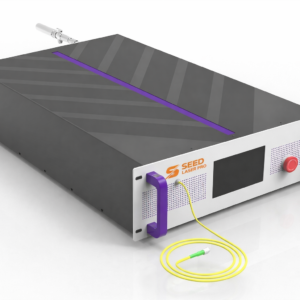
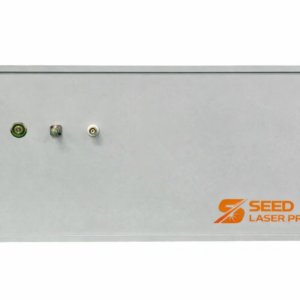
For anyone developing, manufacturing, or qualifying narrow-linewidth fiber lasers, that statement is the practical reality behind every test run. Techwin’s laser testing and measurement systems cover the two parameters that matter most in single frequency laser characterization: linewidth and relative intensity noise. The Laser Linewidth Measurement System resolves linewidths down to 2 kHz using delayed self-heterodyne interferometry. The Laser Noise Measurement System characterizes RIN from near the quantum limit at -160 dB/Hz up to above 10 MHz. Both systems support multiple wavelength bands and are built for research laboratories, photonics companies, and laser manufacturers.
QUICK SPECIFICATION SUMMARY
| System | Measurement Type | Wavelength Bands | Key Spec |
| Laser Linewidth Measurement | Linewidth / frequency noise | C-band · 1 µm · 2 µm | Down to 2 kHz linewidth |
| Laser Noise Measurement | RIN / intensity noise | C-band · 1 µm · 2 µm · 780 nm · Visible | -160 dB/Hz to >10 MHz dynamic range |
Why Laser Characterization Matters
A laser’s datasheet lists its specifications. A measurement system tells you whether those specifications are real.
For single frequency fiber lasers and narrow-linewidth semiconductor lasers, two parameters define performance more than any other. Linewidth determines coherence length, sets the measurement resolution ceiling in interferometry and spectroscopy, and controls how well a laser tracks an atomic transition. Relative intensity noise (RIN) sets the signal-to-noise floor for every downstream system using that laser, from coherent LiDAR receivers to quantum sensing detectors.
If either parameter is off, everything built around the laser performs below expectation. Getting accurate, repeatable measurements of both is not optional for serious laser development or production.
Laser Linewidth Measurement System
How It Works
Techwin’s Laser Linewidth Measurement System is based on the delayed self-heterodyne interferometry (DSHI) principle. In this technique, the laser under test is split into two paths. One path passes through a long fiber delay line to decorrelate it from the original signal. The other path passes through an acousto-optic modulator (AOM) that acts as a frequency shifter. The two paths are recombined and detected. The resulting beat signal carries the linewidth information of the laser, which is analyzed using a low-noise RF amplifier and a high-resolution spectrum analyzer.
This approach measures linewidth without needing a second low-noise reference laser. That is a significant practical advantage. Most interferometric linewidth measurement methods require a reference source of equal or better spectral quality, which makes them difficult to apply to the narrowest-linewidth lasers. The DSHI approach avoids that problem.
What It Measures
- Laser linewidth down to 2 kHz
- Frequency noise power spectral density
- Lorentzian linewidth component
Wavelength Coverage
- C-band (1530 to 1570 nm)
- 1 µm wavelength band
- 2 µm wavelength band
Key Design Features
High-sensitivity detection. Low-noise balanced detectors and high-linearity amplifiers ensure accurate extraction of weak noise signals, even from lasers with very narrow linewidth where the beat signal is close to the noise floor.
Vibration isolation. The system uses a dedicated vibration-isolation design to reduce environmental interference. This is important for narrow-linewidth measurements, where acoustic and mechanical perturbations can broaden the measured linewidth and produce unreliable results.
Turnkey operation. The system integrates the photoreceiver, RF amplifier, and spectrum analyzer in a single setup. No additional test equipment is required.
Laser Noise Measurement System
How It Works
Techwin’s Laser Noise Measurement System is designed specifically for high-precision relative intensity noise (RIN) characterization. It uses low-noise photodetection, high-resolution spectrum analysis, and digital signal processing to measure the intensity noise performance of the laser under test across a wide frequency range.
The system employs low-noise balanced detectors. Balanced detection subtracts the common-mode noise shared between the two detector arms, which suppresses detector and amplifier noise below the laser noise being measured. This is what allows RIN measurements near the quantum noise limit.
What It Measures
- Relative intensity noise (RIN) from near the quantum limit at -160 dB/Hz
- Noise frequency range up to above 10 MHz
- Suitable for narrow-linewidth fiber lasers and semiconductor lasers
Wavelength Coverage
- C-band (1530 to 1570 nm)
- 1 µm wavelength band
- 2 µm wavelength band
- 780 nm
- Visible wavelength bands
Key Design Features
Wide dynamic range. The system covers RIN from -160 dB/Hz near the shot noise limit up to high-frequency ranges above 10 MHz. This range covers the full noise spectrum of virtually any CW laser, from low-frequency technical noise through to high-frequency relaxation oscillation features.
Low-noise balanced detection. Balanced detectors and high-linearity amplifiers suppress instrument noise below the laser noise floor. This is the critical element that makes near-quantum-limit RIN measurement possible without a specialized laboratory setup.
Multi-wavelength coverage. The system covers a wider set of wavelength bands than the linewidth system, including 780 nm and visible wavelengths. This makes it applicable to frequency-converted fiber laser outputs and semiconductor laser sources used in atomic physics and quantum sensing.
Who These Systems Are Built For
Laser manufacturers and R&D teams Production qualification of single frequency fiber lasers requires consistent, repeatable linewidth and RIN measurements. Techwin’s systems are built for this workflow. They are turnkey, they do not require a reference laser, and they cover the wavelength bands relevant to Yb, Er, and Tm fiber laser products.
Research laboratories Universities and national labs developing narrow-linewidth lasers for optical clocks, cold atom physics, gravitational wave research, and quantum sensing need measurement capability that matches the performance of the laser under development. A system that measures to 2 kHz linewidth and -160 dB/Hz RIN is the right floor for characterizing single frequency fiber seed lasers at the research level.
Photonics instrument companies OEM instrument builders who specify Techwin single frequency lasers as components in their systems often need to verify laser performance in their own test environment. These systems provide that capability without requiring a full optical metrology laboratory setup.
Comparison: Linewidth System vs Noise System
| Feature | Laser Linewidth Measurement System | Laser Noise Measurement System |
| Primary measurement | Linewidth, frequency noise | Relative intensity noise (RIN) |
| Measurement principle | Delayed self-heterodyne (DSHI) | Balanced photodetection + DSP |
| Minimum measurable value | 2 kHz linewidth | -160 dB/Hz RIN |
| Frequency analysis range | Spectral noise up to RF bandwidth | Up to >10 MHz |
| Wavelength bands | C-band, 1 µm, 2 µm | C-band, 1 µm, 2 µm, 780 nm, visible |
| Reference laser required | No | No |
| Best for | Linewidth spec verification, R&D | RIN characterization, noise floor testing |
Both systems can be used together for complete laser characterization. If you are qualifying a single frequency laser product for a precision application, running both measurements gives you the full noise profile.
How to Select the Right System
If your primary concern is linewidth or coherence: The Laser Linewidth Measurement System is the right starting point. It directly measures the parameter that determines coherence length, spectral purity, and suitability for interferometric and spectroscopic applications.
If your primary concern is intensity noise: The Laser Noise Measurement System covers RIN across a wide dynamic range, from near-quantum-limited performance to high-frequency noise features. It is the right tool for qualifying lasers going into coherent sensing receivers, LiDAR systems, or quantum sensing detectors where intensity noise sets the signal-to-noise floor.
If you need both: The two systems are complementary. Many laser development and qualification workflows require both linewidth and RIN characterization to fully specify a laser’s noise performance.
Need help choosing? Talk to an engineer.
Why Techwin
Techwin designs and manufactures both the lasers and the systems used to test them. That combination is unusual. It means the measurement systems are built with a direct understanding of what matters when characterizing single frequency fiber lasers, not as generic test instruments adapted to a new market.
The linewidth and noise measurement systems are used internally at Techwin to verify every single frequency fiber laser before shipment. The same systems are available as standalone products for customers who need that capability in their own facilities.
If your application requires measurement capability beyond the standard configurations, contact the engineering team to discuss custom wavelength band coverage or system integration requirements.