seed laser pro

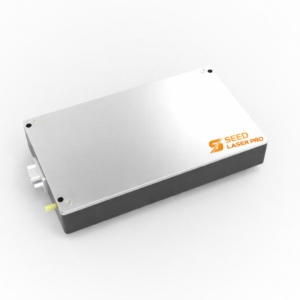
  • 2.0 μm Point Light Source

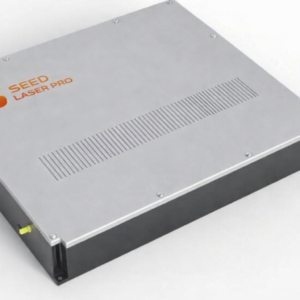
    The 2.0 μm laser point light source is a miniaturized laser device designed for high-precision spatial positioning, eye safety, and strong environmental adaptability. Its core advantages include eye safety, micrometer-level spot positioning, high peak power, automotive-grade robustness, and multi-wavelength customization, making it a key light source for next-generation LiDAR, precision medical applications, and industrial processing.

    Product Features

    High Beam Quality
    Stable Power
    Polarization-Maintaining Single-Mode Output

    Typical Applications

    Scientific Research
    Experimental Teaching
    Device Testing and Measurement

  • 2.0 μm Ultra-Narrow Linewidth Single-Frequency Laser

    The 2.0 μm ultra-narrow linewidth single-frequency laser is a core component of high-precision optical systems. Its key features are extremely narrow linewidth, combined with single-frequency stability and low-noise characteristics, making it especially suitable for high-precision spectroscopy, coherent detection, and related applications.

    Product Features

    Narrow Linewidth
    Low Noise
    High Power Output

    Typical Applications

    High-Precision Spectroscopy
    Coherent Detection
    Medical Applications
    LiDAR

  • 266 nm Single-Frequency Frequency-Converted Laser

    The 266 nm frequency-converted laser is a high-performance narrow-linewidth frequency-multiplied laser developed by combining the company’s proprietary narrow-linewidth fiber laser with efficient and stable frequency conversion technology. It offers excellent beam quality and high power stability, and can be applied in fields such as semiconductor processing and material analysis.

    Product Features

    Narrow Linewidth Preservation Technology
    Fourth-Harmonic Generation Technology Breakthrough
    Deep Ultraviolet Optical Processing

    Typical Applications

    Semiconductor Processing
    Material Analysis

  • 509 nm Single-Frequency Frequency-Converted Laser

    The 509 nm frequency-converted laser is a high-performance green laser with completely independent intellectual property rights and performance reaching an internationally advanced level. It adopts highly efficient nonlinear frequency conversion technology and optimized optical path design, combined with beam quality optimization and power stability control, to achieve high-brightness, low-noise green laser output with excellent beam quality.

    Product Features

    Excellent Beam Quality
    Long-Term Power Stabilization Technology
    High-Efficiency Nonlinear Frequency Conversion Technology

    Typical Applications

    Cold Atom Physics
    Laser Medical Applications
    Solar Cell Processing

  • 532 nm Frequency-Converted Laser

    The 532 nm frequency-converted laser is a high-performance green laser with completely independent intellectual property rights and performance reaching an internationally advanced level. It employs highly efficient nonlinear frequency conversion technology and optimized optical path design, combined with beam quality optimization and power stability control, to achieve high-brightness, low-noise green laser output with excellent beam quality.

    Product Features

    High-Efficiency Nonlinear Frequency Conversion Technology
    Excellent Beam Quality Optimization System
    Intelligent Stability Control System

    Typical Applications

    Precision Processing
    Biomedical Applications
    Scientific Instruments

  • 780 nm Single-Frequency Frequency-Converted Laser

    The 780 nm frequency-converted laser is a high-performance green laser with completely independent intellectual property rights and performance reaching an internationally advanced level. It adopts highly efficient nonlinear frequency conversion technology and optimized optical path design, combined with beam quality optimization and power stability control, to achieve high-brightness, low-noise green laser output with excellent beam quality.

    Product Features

    High-Efficiency Frequency Conversion Technology
    Excellent Beam Quality Optimization System
    Power Stabilization Technology

    Typical Applications

    Biomedical Fields
    Industrial Processing Applications
    Scientific Instruments

  • 795 nm Single-Frequency Frequency-Converted Laser

    The 795 nm frequency-converted laser is a high-performance laser with completely independent intellectual property rights and performance reaching an internationally advanced level. It adopts highly efficient nonlinear frequency conversion technology and optimized optical path design, combined with beam quality optimization and power stability control, to achieve high-brightness, low-noise red laser output with excellent beam quality.

    Product Features

    Excellent Beam Quality
    Long-Term Power Stabilization Technology
    High-Efficiency Frequency Conversion Technology

    Typical Applications

    Rubidium Atomic Physics
    Precision Measurement

  • Broadband Ultra-Low-Noise Single-Frequency Fiber Laser

    The broadband ultra-low-noise single-frequency fiber laser is designed based on a distributed Bragg reflector (DBR) resonator architecture, combined with multidimensional active and passive suppression techniques, achieving ultra-low relative intensity noise output across a wide bandwidth. This product not only provides narrow-linewidth single-frequency output but also features high power stability and low intensity noise, making it particularly suitable for high-precision coherent detection, distributed fiber sensing, precision interferometry, and other applications with extremely stringent noise requirements.

    Product Features

    • Ultra-Low Noise Performance
    • Wideband Tunable Output
    • Advanced Noise Suppression Technology

    Typical Applications

    • High-Precision Coherent Detection
    • Distributed Fiber Sensing
    • Precision Interferometric Measurement
  • Laser Linewidth Measurement System

    The laser linewidth measurement system is based on the delayed self-heterodyne interferometry principle. An AOM modulator is used as the frequency shifter in the delayed self-heterodyne interferometer. The system includes a high-gain photoreceiver/photodetector, a low-noise RF amplifier (LNA), and a high-resolution spectrum analyzer for measurement. The system features high sensitivity and allows the measurement and analysis of laser linewidths as low as 2 kHz.

    Core Functions and Features

    Measurable Wavelength Bands
    C-band, 1 μm wavelength band, 2 μm wavelength band

    High-Sensitivity Detection
    Low-noise balanced detectors and high-linearity amplifiers are used to ensure accurate extraction of weak noise signals.

    Environmental Interference Resistance Design
    Through special vibration-isolation design, the system’s resistance to environmental interference is improved, ensuring normal operation even in harsh environments.

  • Laser Noise Measurement System

    This system is specifically designed for high-precision measurement of laser relative intensity noise (RIN). It is suitable for noise characterization of various light sources, including narrow-linewidth fiber lasers and semiconductor lasers. The system employs low-noise photodetection, high-resolution spectrum analysis, and digital signal processing technology to accurately characterize the intensity noise performance of lasers, providing reliable test data for scientific research and industrial applications.

    Core Functions and Features

    Measurable Wavelength Bands
    C band, 1 μm, 780 nm, 2 μm, and visible wavelength bands

    Wide Dynamic Range Measurement
    Supports RIN testing from near the quantum limit (−160 dB/Hz) up to high-frequency ranges (>10 MHz), covering typical laser noise spectra.

    High-Sensitivity Detection
    Utilizes low-noise balanced detectors and high-linearity amplifiers to ensure accurate extraction of weak noise signals.

    Multi-Band Analysis
    Integrates baseband FFT analyzer and RF spectrum analyzer functions to enable noise power spectral density (PSD) measurements from DC to the GHz range.

    Environmental Interference Resistance Design
    Special vibration-isolation design enhances resistance to environmental interference, ensuring reliable operation even under harsh conditions.

Translate »